Optimizing Island Energy Systems: Modeling Hydrogen Integration in the Asia-Pacific

premium account

Recording of Wednesday, May 07, 2025 | The smarter E Europe 2025 | Conference Program | Language: English | Duration: 18:15 .

New Open-Source Tool Enhances Off-Grid Energy Projects with Hydrogen Integration in Nigeria and Thailand

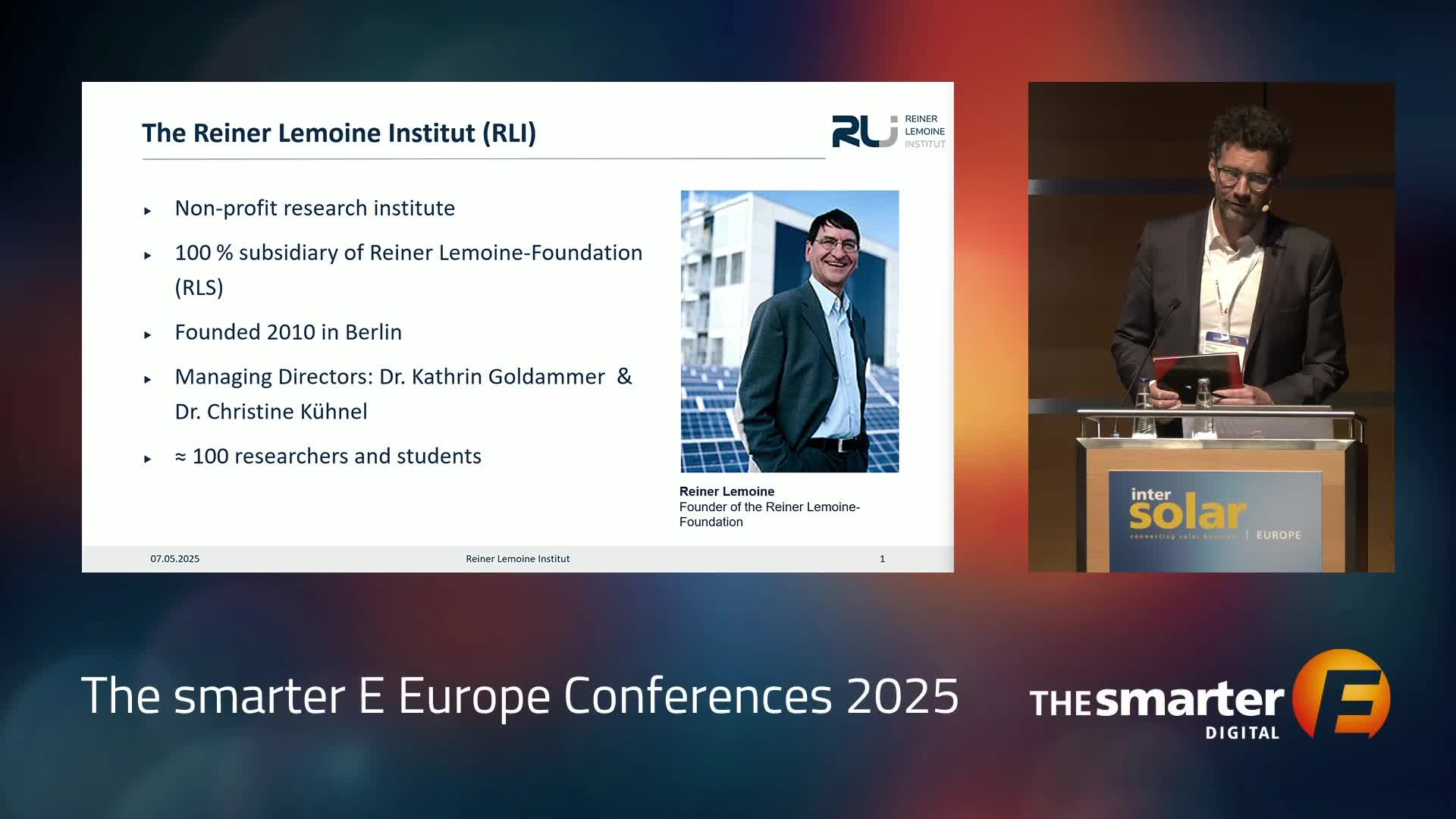
The session focused on the digitalization of off-grid projects, highlighting innovative solutions to expand these initiatives. Moderated by Dr. Philipp Blechinger from the Reiner Lemoine Institut gGmbH, it emphasized their research unit's dedication to off-grid systems and collaboration with development agencies for sustainable energy implementation. A key project discussed involved integrating renewable energy and hydrogen in Pacific islands like Fiji and Tonga, which currently rely heavily on costly diesel generators. The transition towards renewables combined with battery storage was presented as a more economical alternative. To optimize system capacities across different conditions, a multi-vector simulator was developed that evaluates various energy vectors such as electricity and hydrogen using technical inputs like efficiency or economic factors including capex costs—providing KPIs for scenario comparison. Case studies demonstrated significant cost reductions through additional photovoltaic (PV) capacity alongside batteries compared to traditional setups without optimization efforts applied beforehand! An open-source tool called "off-grid planner" aids project optimization by offering free design resources; plans are underway to include components tailored for Thailand’s demand profiles too.

Automated summarization by AI Conver

Dr. Philipp Blechinger
Head of Unit Off-Grid Systems
Reiner Lemoine Institut gGmbH
Germany

This session explores how digitalization is revolutionizing off-grid energy projects, enabling scalability and efficiency in underserved areas. Experts will discuss cutting-edge solutions based on the use and application of digital tools to support planning, development, and operations ultimately enhancing affordability. Attendees will gain insights into leveraging digital tools for optimized planning and project management, customer engagement, monitoring, and sustainable growth. Real-world case studies will highlight successful implementations, showcasing how technology bridges the gap between innovation and impact in energy access.

Further Talks of this session:

Speaker

Brianna Schuyler
Director of Digital Product
Access to Energy Institute
Germany

To Talk

Speaker

Chloé Coral
Project Engineer
Azimut 360
Spain

To Talk

Speaker

Bachirou Djibo Boubé
Senior Guest Researcher
Reiner Lemoine Institut gGmbH
Germany

Recording of presentation not authorized for publication.

Recording of presentation not authorized for publication.

Further Content
Industry News
Policy as a Catalyst for Green Growth in East Africa

January 28, 2026

Across East Africa, well‑designed and consistent public policy is proving essential to accelerating the clean‑energy transition by building investor confidence, enabling new business models, and driving inclusive green growth.

The smarter E Europe Conferences 2025
Offgrid World, and the Challenges of Water Sector

Wednesday, May 07, 2025, 09:00 am - 10:30 am

The smarter E Europe Conferences 2025 | Conference Program

premium account

Electric cooking with solar energy is on the rise as both solar and battery technologies continue to improve, making it viable for off-grid homes. One of the main hurdles for solar-powered electric cooking has been energy storage. Cooking typically requires a large amount of energy for a short period, while solar generation is intermittent. However, advancements in lithium-ion and solid-state battery technology have made energy storage more efficient, allowing for cooking after sundown or on cloudy days. The efficiency of electric cooking appliances has also improved: In induction stoves, for example, most of the energy goes directly into heating the pot or pan. Appliances like electric pressure cookers and slow cookers are also energy-efficient. They can be ideal for solar-powered cooking setups, as they require a relatively low, steady energy input over a long period of time. With continuous advancements in solar PV and battery storage, solar electric cooking is likely to spread further in regions where grid access is limited or costly, such as parts of Africa, South Asia, and Latin America. In off-grid areas with limited access to electricity, PV systems are also key for powering refrigerators, freezers, refrigerated containers, and cold rooms. They are particularly valuable in rural or remote settings for storing perishable goods, medicines, and vaccines. New technological developments have significantly increased the efficiency of solar refrigeration systems, minimizing or even eliminating the need for battery power at night and during periods of low sunlight.Solar energy can also be used to purify or treat water to make it safe to drink or for agricultural or industrial use. This method leverages the power of sunlight, either directly or indirectly, to remove contaminants, pathogens, and impurities from water. There is a variety of methods for solar water treatment, ranging from using the sun's UV-A rays and heat to complex solar-powered water filtration systems where PV-generated electricity is used to pump water through advanced filtration systems such as ultrafiltration or RO (reverse osmosis). However, solar water treatment systems are still costly and require advanced technology and expertise.This session will provide an overview of current developments and insights into new applications for solar-powered cooking, cooling and water treatment.

The smarter E Europe Conferences 2025
Cleaner Cooking for People and the Planet - Solar PV Based Options

Wednesday, May 07, 2025, 09:00 am - 10:30 am

The smarter E Europe Conferences 2025 | Conference Program

premium account

Electric cooking with solar energy is on the rise as both solar and battery technologies continue to improve, making it viable for off-grid homes. One of the main hurdles for solar-powered electric cooking has been energy storage. Cooking typically requires a large amount of energy for a short period, while solar generation is intermittent. However, advancements in lithium-ion and solid-state battery technology have made energy storage more efficient, allowing for cooking after sundown or on cloudy days. The efficiency of electric cooking appliances has also improved: In induction stoves, for example, most of the energy goes directly into heating the pot or pan. Appliances like electric pressure cookers and slow cookers are also energy-efficient. They can be ideal for solar-powered cooking setups, as they require a relatively low, steady energy input over a long period of time. With continuous advancements in solar PV and battery storage, solar electric cooking is likely to spread further in regions where grid access is limited or costly, such as parts of Africa, South Asia, and Latin America. In off-grid areas with limited access to electricity, PV systems are also key for powering refrigerators, freezers, refrigerated containers, and cold rooms. They are particularly valuable in rural or remote settings for storing perishable goods, medicines, and vaccines. New technological developments have significantly increased the efficiency of solar refrigeration systems, minimizing or even eliminating the need for battery power at night and during periods of low sunlight.Solar energy can also be used to purify or treat water to make it safe to drink or for agricultural or industrial use. This method leverages the power of sunlight, either directly or indirectly, to remove contaminants, pathogens, and impurities from water. There is a variety of methods for solar water treatment, ranging from using the sun's UV-A rays and heat to complex solar-powered water filtration systems where PV-generated electricity is used to pump water through advanced filtration systems such as ultrafiltration or RO (reverse osmosis). However, solar water treatment systems are still costly and require advanced technology and expertise.This session will provide an overview of current developments and insights into new applications for solar-powered cooking, cooling and water treatment.

The smarter E Europe Conferences 2025
E-Cooking Approaches in the EnDev Programme

Wednesday, May 07, 2025, 09:00 am - 10:30 am

The smarter E Europe Conferences 2025 | Conference Program

premium account

Electric cooking with solar energy is on the rise as both solar and battery technologies continue to improve, making it viable for off-grid homes. One of the main hurdles for solar-powered electric cooking has been energy storage. Cooking typically requires a large amount of energy for a short period, while solar generation is intermittent. However, advancements in lithium-ion and solid-state battery technology have made energy storage more efficient, allowing for cooking after sundown or on cloudy days. The efficiency of electric cooking appliances has also improved: In induction stoves, for example, most of the energy goes directly into heating the pot or pan. Appliances like electric pressure cookers and slow cookers are also energy-efficient. They can be ideal for solar-powered cooking setups, as they require a relatively low, steady energy input over a long period of time. With continuous advancements in solar PV and battery storage, solar electric cooking is likely to spread further in regions where grid access is limited or costly, such as parts of Africa, South Asia, and Latin America. In off-grid areas with limited access to electricity, PV systems are also key for powering refrigerators, freezers, refrigerated containers, and cold rooms. They are particularly valuable in rural or remote settings for storing perishable goods, medicines, and vaccines. New technological developments have significantly increased the efficiency of solar refrigeration systems, minimizing or even eliminating the need for battery power at night and during periods of low sunlight.Solar energy can also be used to purify or treat water to make it safe to drink or for agricultural or industrial use. This method leverages the power of sunlight, either directly or indirectly, to remove contaminants, pathogens, and impurities from water. There is a variety of methods for solar water treatment, ranging from using the sun's UV-A rays and heat to complex solar-powered water filtration systems where PV-generated electricity is used to pump water through advanced filtration systems such as ultrafiltration or RO (reverse osmosis). However, solar water treatment systems are still costly and require advanced technology and expertise.This session will provide an overview of current developments and insights into new applications for solar-powered cooking, cooling and water treatment.

Publications
Intersolar Solarize Africa Market Report 2023

This third report in the "Solarize Africa Market Report" series investigates current developments on the African continent in general and 16 African national PV markets in detail.

Service Menu
You are using an outdated browser

The website cannot be viewed in this browser. Please open the website in an up-to-date browser such as Edge, Chrome, Firefox, or Safari.