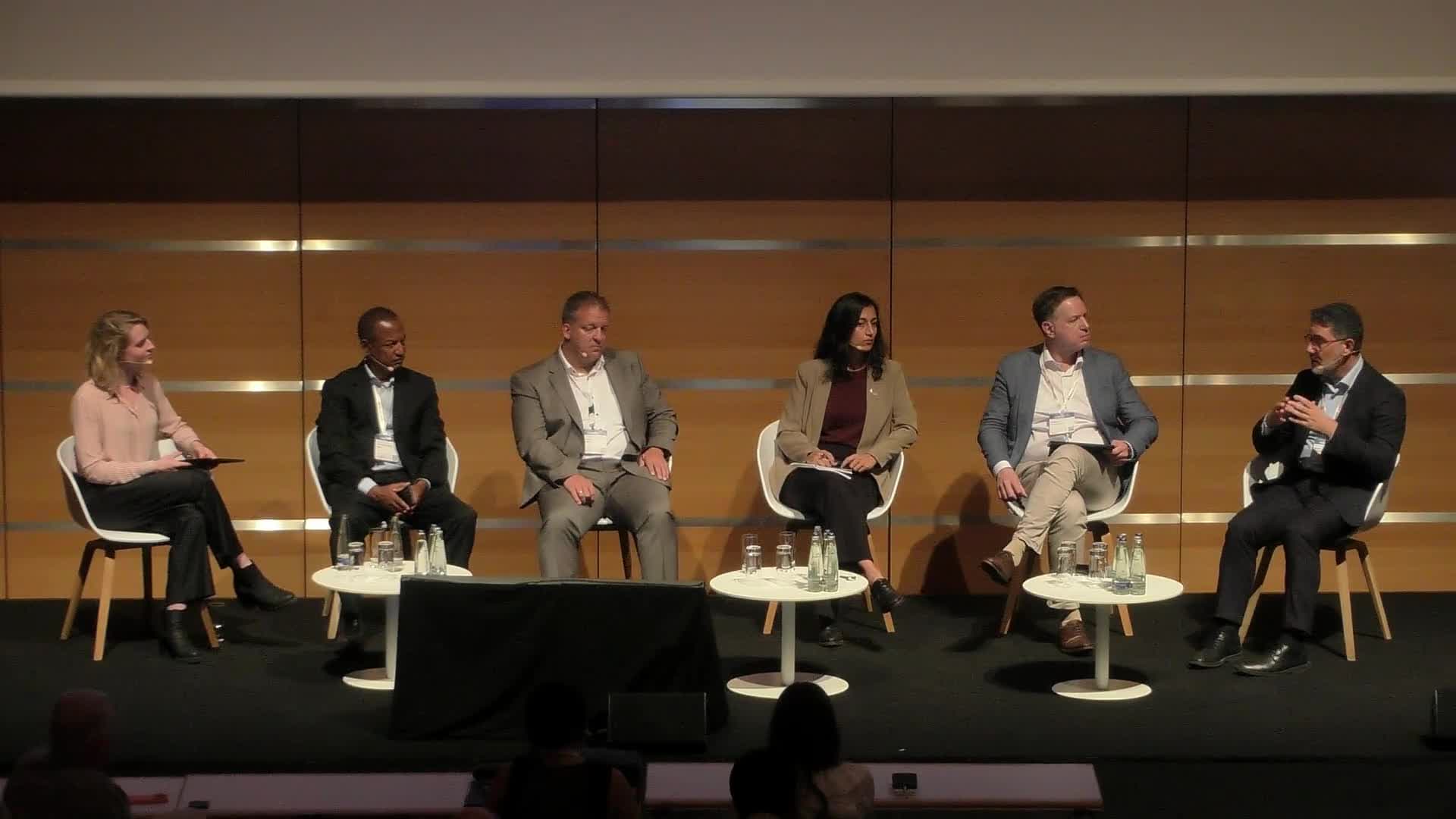
Panel Discussion

premium account

Recording of Tuesday, June 23, 2026 | The smarter E Europe Conferences 2026 | Language: English | Duration: 62:34 .

Resilience and Innovation in Energy Solutions Amidst Conflict

Mini-grids are essential for maintaining vital services in conflict-affected regions like Ukraine, where solar systems, such as the 2.3-megawatt installation for the Zhytomyr water utility, play a critical role in ensuring uninterrupted water supply. The construction of a 4-megawatt emergency power system reflects the urgent need for backup power amidst infrastructural disruptions. Centralized grids are economically unviable, driving a shift towards decentralized solutions that can effectively meet energy demands in war-torn countries like Syria, where large-scale destruction has led to the adoption of small-scale energy systems. Solar energy has become a lifeline for Syria, significantly improving access to electricity and supporting health services and agriculture. In Ethiopia, robust frameworks for renewable energy and mini-grids highlight successful transitions that can inform other nations facing similar challenges. The focus on local engagement and training of personnel is crucial for the operational success of energy systems, enhancing community resilience. Political commitment and innovative financing mechanisms are vital for advancing these energy transitions and ensuring long-term sustainability in affected regions.

Automated summarization by AI Conver

Speaker

Gianni Chianetta
Chair
Greening the Islands Foundation
Italy

Ing. Dereje Walelign Mera
Chairman
Ethiopian Solar Energy Development Association
Ethiopia

Vladyslav Sokolovskyi
Chairman of the Board of the Solar Energy Association of Ukraine
Solar Energy Association of Ukraine
Ukraine

Tobias Merkel
Managing Director
SOLAR23 GmbH
Germany

Lana Almasri
Independent Energy Advisor

In this urgent and forward-looking session of the Intersolar Europe Conference, we bring together voices from the frontlines of decentralized energy: representatives from Syria, Ukraine and Ethiopia - spanning immediate crisis response and longer-term energy market development - alongside practitioners who build and operate these systems at scale. What unites all perspectives is a shared insight: decentralized renewable energy proves its reliability precisely where conventional grids are absent, destroyed or isolated - from war-torn regions to island communities cut off from mainland supply.The initial focus is on the immediate, life-saving needs: hospitals, schools and water supply systems. We then move to the medium-term goal - interconnecting mini-grids, rebuilding resilient infrastructure, creating new jobs and livelihoods. A central question runs through both phases: how do we train local workforces through vocational training, apprenticeships and certification programs, so that rebuilding is not only about hardware, but about people and enduring capacity?Join us to examine how off-grid solar transitions from emergency stop-gap to the sustainable backbone of recovery and growth.

Further Talks of this session:

Speaker

Lea Dunst
International Project Manager
BSW - German Solar Association

Dr. Tania Rödiger-Vorwerk
Director, Climate, Environment, Health, Federal Ministry for Economic Cooperation and Development
Bundesministerium für wirtschaftliche Zusammenarbeit und Entwicklung (BMZ)

To Talk

Speaker

Gianni Chianetta
Chair
Greening the Islands Foundation
Italy

To Talk

Further Content
Publications
Intersolar Solarize Africa Market Report 2023

This third report in the "Solarize Africa Market Report" series investigates current developments on the African continent in general and 16 African national PV markets in detail.

The smarter E Europe Conferences 2025
Factors That Influence the Success of a Minigrid Project

Wednesday, May 07, 2025, 11:00 am - 12:30 pm

The smarter E Europe Conferences 2025 | Conference Program

premium account

Off-grid solar systems are often the least expensive option for rural electrification. Solar home systems can power individual households, while mini-grids can supply entire villages. Each comes with its own advantages, disadvantages, and challenges. The aim of this session is to explore challenges as well as success stories. It takes well-functioning components such as battery systems, charge management and inverters to make projects successful. Proper system sizing, maintenance and repair management, as well as a robust financial concept are also necessary. If one of these elements is missing, the electrification will not be sustainable. This session will focus on the aspects mentioned above. The speakers will present successful and unsuccessful approaches and discuss what can be learned from them.

The smarter E Europe Conferences 2025
Setting the Scene "Off-Grid"

Wednesday, May 07, 2025, 04:00 pm - 05:30 pm

The smarter E Europe Conferences 2025 | Conference Program

premium account

Photovoltaic prices have fallen continuously in recent years - a trend that should translate into a growing market for off-grid solutions. Declining costs are crucial for rural electrification in particular, making sustainable energy supply economically viable in remote regions. However, so far many of these price advantages have not yet reached the people that need them most. Do existing framework conditions to foster rural electrification still work in this new market reality? Which measures are needed to ensure that cost reductions reach our target group? This session discusses strategies for improving the availability of low-cost off-grid solutions, financing and innovative business models. A look at successful practical examples shows which political, economic and technological levers need to be pulled to make off-grid PV accessible on a large scale.

The smarter E Europe Conferences 2025
Panel Discussion of of the Session Off-Grid: When Will Off-Grid PV Follow the Affordability Trend?(BSW)

Wednesday, May 07, 2025, 04:00 pm - 05:30 pm

The smarter E Europe Conferences 2025 | Conference Program

premium account

Photovoltaic prices have fallen continuously in recent years - a trend that should translate into a growing market for off-grid solutions. Declining costs are crucial for rural electrification in particular, making sustainable energy supply economically viable in remote regions. However, so far many of these price advantages have not yet reached the people that need them most. Do existing framework conditions to foster rural electrification still work in this new market reality? Which measures are needed to ensure that cost reductions reach our target group? This session discusses strategies for improving the availability of low-cost off-grid solutions, financing and innovative business models. A look at successful practical examples shows which political, economic and technological levers need to be pulled to make off-grid PV accessible on a large scale.

Webinar Collection
A New Renewable Energy Knowledge Exchange Partnership: Exploring Collaboration and Investment Opportunities in Rwanda, Zambia, Malawi and Scotland

January 23, 2026

free account

Learn about Malawi, Zambia & Rwanda.

Service Menu
You are using an outdated browser

The website cannot be viewed in this browser. Please open the website in an up-to-date browser such as Edge, Chrome, Firefox, or Safari.