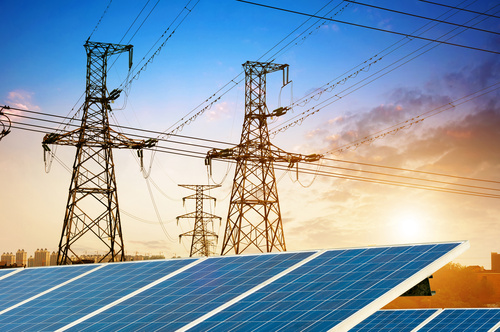
As 2025 draws to a close, Africa’s solar story is entering a new and decisive chapter. What was once seen as slow and incremental progress has begun to transform into something far more dynamic.
The continent’s solar capacity, which reached 19.2 GW by the end of 2024, has grown steadily across utility-scale, commercial and industrial systems, mini-grids, and home installations. Despite the enormity of Africa’s solar potential, solar still represents only a small share of the continent’s total electricity generation. But, the direction of change is unmistakable.
The Global Solar Council projects that annual solar installations across Africa will rise by an impressive 42 percent in 2025 - clear evidence that the market is moving from aspiration to acceleration. Over the next four years, the same analysis anticipates an additional 23 GW of solar capacity by 2028, effectively more than doubling current deployment.
This momentum received a significant boost at the recently concluded COP30 in Brazil in November, where global leaders reaffirmed commitments to triple renewable energy capacity to 11,000 GW by 2030, with explicit nods to Africa's pivotal role. Building on the 2023 Nairobi Declaration from the Africa Climate Summit - which aims to scale the continent's renewable capacity from 56 GW in 2022 to at least 300 GW by 2030 - discussions at COP30 highlighted solar as a cornerstone for African energy access and resilience.
Resolutions emphasised blended finance mechanisms to de-risk solar investments, with pledges totalling over $50 billion in new commitments for African renewables, including targeted funds for off-grid solar and mini-grids in underserved regions.
African nations, led by voices from Nigeria, Ghana, and South Africa, advocated for “economic room” to leverage solar growth while transitioning from fossil fuels, securing agreements for technology transfers and concessional loans to accelerate deployment.
These outcomes underscore Africa's accelerating solar trajectory, positioning the continent not just as a beneficiary but as a global leader in clean energy innovation. This is not gradual progress. It signals a breakaway moment for the continent.
For much of the last decade, Africa’s solar landscape was dominated by a few countries, with South Africa long seen as the continental anchor. That picture is changing rapidly.
Egypt, for example, added roughly 700 MW of solar capacity in 2024, while a broadening set of countries - Ghana, Burkina Faso, Nigeria, Zambia, and others - are now scaling new projects at a meaningful pace. At least 18 African countries are expected to install more than 100 MW of solar capacity each in 2025, compared to only two countries that reached that threshold in 2024. This diversification marks a turning point, as regional markets begin to mature simultaneously rather than sequentially.
At the same time, a quiet revolution is unfolding in energy storage. Only a few years ago, Africa’s annual storage deployment hovered at about 150 MWh. By 2024, that figure had skyrocketed to 1,641 MWh, driven by falling lithium-ion battery prices and the growing need for reliable, dispatchable clean energy.
Storage has shifted from being an experimental add-on to becoming a core enabler of large-scale and off-grid solar projects. The ability to pair solar with meaningful storage capacity is helping countries stabilise their grids, reduce exposure to hydropower shocks, and strengthen energy security.
Zambia’s addition of 60 MW of solar in response to hydropower shortfalls illustrates how renewable energy is increasingly becoming a tool not just for decarbonisation but for resilience.
But momentum alone will not carry Africa to its full potential. While the continent holds around 60 percent of the world’s most promising solar resources, access to affordable, long-term finance remains the single biggest constraint.
To achieve the projected 23 GW of new solar installations by 2028, African governments, investors, and development partners must work together to unlock more concessional financing, expand blended finance instruments, and mitigate risk for large-scale and emerging solar developers - efforts that gained fresh impetus from COP30's finance-focused resolutions.
This is precisely why Intersolar Africa 2026 arrives at a pivotal moment. The February 2026 event in Nairobi will serve as a crucial platform for translating this momentum into action. The exhibitors and industry professionals that will participate will bring together global expertise and African innovation under one roof.
Beyond showcasing the latest technologies in photovoltaics, energy storage, grid integration, and digital solutions, the event will deepen the conversations that matter most: how to unlock capital, shape enabling policies, and build partnerships that accelerate deployment.
The event aims to act as a catalyst for the next phase of the continent’s clean energy evolution. As investment commitments rise and regulatory frameworks begin to mature, the need for sustained collaboration becomes even more critical.
Nairobi’s role as a regional renewable energy hub underscores this. The city is increasingly where multinationals, African developers, financiers, and policymakers convene to forge the alliances that determine the pace and scale of the energy transition.
Successful deployment of the projected solar capacity over the next few years would deliver profound benefits: more reliable power for households and businesses; cleaner and more affordable energy for industry; thousands of new jobs across installation, manufacturing, operations, and maintenance; and significant progress toward closing energy access gaps.
For a continent that has long endured the economic drag of power shortages, the opportunity to anchor growth on a resilient, diversified, and low-carbon energy system is transformative.
However, progress will depend on whether Africa and its partners can navigate the final mile - mobilising finance at scale, strengthening policy certainty, and building the partnerships needed to deploy projects faster and more sustainably. These are the conversations and decisions that will shape the next decade, and they will be at the centre of the Intersolar Africa 2026 dialogue.
Africa’s solar acceleration is no longer a distant promise; it is happening in real time. With storage markets expanding, new countries entering the solar landscape, and investment capacity growing - bolstered by COP30's forward-looking resolutions - 2026 could well be the inflection point where solar becomes a foundational pillar of Africa’s energy systems rather than a niche component.
As the continent steps into this decisive moment, the question is no longer whether Africa can lead in solar - but how fast and how boldly it chooses to move. The momentum is here. The opportunity is clear.