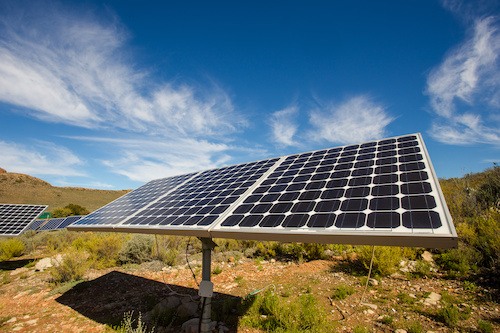
Africa's Solar Revolution: A Deep Dive into Kenya's PV Development (April - October 2025)

Industry News – October 20, 2025

Africa, a continent endowed with 60% of the world's best solar resources, is on the cusp of a solar revolution. Photovoltaic (PV) technology is increasingly being recognized as a critical solution to bridge the continent's energy gap, drive economic growth, and combat climate change. Within this continental shift, Kenya stands out as a key player, demonstrating a strong commitment to renewable energy and a rapidly evolving solar market.

Africa's Solar PV Landscape: A Continent on the Rise

The African solar market is experiencing a period of unprecedented growth and transformation. According to the Global Solar Council, the continent's solar market is projected to surge by 42% in 2025, with an additional 23 GW of solar capacity expected to be installed by 2028, more than doubling the current capacity [1]. This growth is not just concentrated in a few key markets; a significant trend of market diversification is emerging [1].
The influx of Chinese solar panels has been a major driver of this growth, with a record 9,516 MW worth of panels imported to Africa in the first seven months of 2025, representing a 60% year-over-year increase [2]. However, despite this rapid expansion, solar PV still accounts for only 3% of the continent's electricity generation, highlighting the immense untapped potential.

Investment and Financing

A significant hurdle to unlocking Africa's full solar potential is the high cost of capital, which is 3 to 7 times higher than in developed countries [1]. The continent receives only 3% of global energy investment, a far cry from the $200 billion needed annually to achieve universal energy access and climate goals [1]. Addressing this financing gap through innovative financing mechanisms, de-risking instruments, and increased private sector investment is critical for the continent's solar future.

Kenya's Solar PV Sector: A Deep Dive

Kenya has long been a leader in renewable energy in Africa, and its solar sector has seen significant activity in the past six months. While the country is a powerhouse in geothermal and hydropower, it is now making concerted efforts to harness its vast solar potential.

Key Projects and Developments (April - October 2025)

Several key projects and financing deals have highlighted the dynamism of the Kenyan solar market:

  • Sun King's Major Financing Deal: In a landmark deal in July 2025, Sun King, the world's largest off-grid solar company, secured $156 million in financing to boost solar power access in Kenya. The deal, backed by Citigroup and British International Investment, underscores the growing investor confidence in the Kenyan off-grid solar market [3].
  • Solar for Agriculture: The launch of the Solar Energy for Agricultural Resilience (SoLAR) Phase II project in October 2025 marks a significant step in integrating solar power with agriculture. Led by the International Water Management Institute (IWMI), the project focuses on deploying solar-powered irrigation systems to enhance agricultural productivity and climate resilience [4].
  • Commercial and Industrial (C&I) Sector Growth: The C&I solar market is experiencing a boom. In September 2025, Mabati Rolling Mills (MRM) commissioned a 2.9 MW rooftop solar system at its Mariakani plant [5]. Additionally, Empower New Energy and Abyssinia Group Industries scaled up their partnership for a 9 MWp solar power development in Kenya [6].
  • Residential Solutions: The residential solar market is also gaining traction, with companies like KSTAR showcasing their residential energy solutions at events like Solar Africa in Kenya in June 2025 [7].

Policy and Regulatory Environment

Kenya's government has put in place a supportive policy framework to drive the growth of the solar sector.

  • National Energy Policy 2025-2034: This policy sets out a bold strategy for achieving universal electricity access by 2030 and optimizing the use of Kenya's vast renewable energy resources [10].
  • Renewable Energy Auctions Policy: Introduced in 2021, this policy provides a new procurement method for renewable energy projects, moving away from the previous feed-in-tariff system [11].
  • Tax Incentives: The government offers tax incentives for the import of solar equipment, making solar solutions more affordable and accessible, particularly for rural households [12].
  • 100% Renewable Energy Target: Kenya has set an ambitious target of achieving a 100% renewable energy grid by 2030, a goal that will necessitate a significant scaling up of solar power [13].

Emerging Trends and Future Outlook

The future of solar PV in Africa and Kenya is bright, with several emerging trends poised to drive further growth:

  • Agrivoltaics: The integration of solar panels with agriculture, as seen in the SoLAR Phase II project, offers a promising solution to land-use conflicts and can enhance both food and energy security.
  • Renewable Hydrogen and E-mobility: The growing demand for renewable hydrogen and the rise of e-mobility will create new markets for solar power, further driving its expansion.
  • Off-grid and Distributed Solar: Off-grid and distributed solar solutions will continue to play a crucial role in providing energy access to remote and underserved communities.

Conclusion

The past six months have been a period of significant progress and dynamism for the solar PV sector in Africa, with Kenya at the forefront of this transformation. The combination of a supportive policy environment, increasing investor confidence, and innovative projects is creating a fertile ground for the rapid expansion of solar power. While challenges, particularly in financing, remain, the outlook for the African and Kenyan solar markets is overwhelmingly positive. As the continent continues to unlock its immense solar potential, PV technology will undoubtedly play a pivotal role in powering a sustainable and prosperous future for Africa.

References

[1] Global Solar Council. (2025, March 12). Africa Market Outlook for Solar PV 2025-2028. https://www.globalsolarcouncil.org/resources/africa-market-outlook-for-solar-pv-2025-2028/
[2] South China Morning Post. (2025, September 25). Chinese solar panels rewire Africa for the future at record pace as costs fall. https://www.scmp.com/news/china/diplomacy/article/3326649/chinese-solar-panels-rewire-africa-future-record-pace-costs-fall
[3] Bloomberg. (2025, July 28). Sun King Wins Citi-Backed Loan to Boost Kenya Solar Power Access. https://www.bloomberg.com/news/articles/2025-07-28/sun-king-wins-citi-backed-loan-to-boost-kenya-solar-power-access
[4] PVknowhow.com. (2025, October 6). Solar power agriculture Kenya: Impressive SoLAR Phase II. https://www.pvknowhow.com/news/solar-power-agriculture-kenya-impressive-solar-phase-ii/
[5] Econews.co.ke. (2025, September 12). MRM Commissions Solar Projects at Mariakani Plant. https://econews.co.ke/2025/09/12/mrm-commissions-solar-projects-at-mariakani-plant/
[6] SolarQuarter. (2025, September 17). Empower New Energy And Abyssinia Group Industries Scale Up Partnership For 9 MWp Solar Power Development In Kenya. https://solarquarter.com/2025/09/17/empower-new-energy-and-abyssinia-group-industries-scale-up-partnership-for-9-mwp-solar-power-development-in-kenya/
[7] PV Tech. (2025, June 30). KSTAR showcases residential energy solutions at Solar Africa in Kenya. https://www.pv-tech.io/news/kstar-showcases-residential-energy-solutions-at-solar-africa-in-kenya/
[8] Market Data Forecast. (2025, August). Africa Solar Market Size, Share & Growth, 2033. https://www.marketdataforecast.com/market-reports/africa-solar-market
[9] Nation. (2025, September 12). How Africa's solar revolution is bridging the energy divide. https://nation.africa/kenya/health/how-africa-s-solar-revolution-is-bridging-the-energy-divide-5186550
[10] Ministry of Energy, Kenya. (2025, February 18). National Energy Policy 2025 – 2034. https://www.energy.go.ke/sites/default/files/Final%20Draft%20%20National%20Energy%20Policy%2018022025.pdf
[11] International Energy Agency. (2024). Kenya 2024 Energy Policy Review. https://iea.blob.core.windows.net/assets/98bc7ce1-b22d-48c9-9ca2-b668ffbfcc4b/Kenya2024.pdf
[12] Biomass Producer. (2025, May 18). Kenya’s Green Energy Revolution: How Policy Success Drives Renewable Growth. https://biomassproducer.com.au/uncategorized/kenyas-green-energy-revolution-how-policy-success-drives-renewable-growth/
[13] Nature. (2025, March 26). Kenya's big bet on renewables

Further Content
Publications
Intersolar Solarize Africa Market Report 2023

This third report in the "Solarize Africa Market Report" series investigates current developments on the African continent in general and 16 African national PV markets in detail.

Webinar
Accelerating C&I: Unlocking Growth in Commercial & Industrial Solar

January 16, 2025

free account

The field of agrivoltaics (Agri-PV) is growing increasingly in Germany and in France. The level of interest from players in agriculture, energy supply and research is rising sharply.

The smarter E Europe Exhibition Program 2025
BeCool: Clean cooling for markets in Kenya

Wednesday, May 07, 2025, 10:30 am - 01:00 pm

The smarter E Europe Exhibition Program 2025 | Exhibition Program

premium account

The smarter E AWARD is one of the most prestigious awards in the energy industry. Once again, numerous companies that have developed visionary and pioneering products and projects that are among the finalists in 2025.

The smarter E Europe Conferences 2025
Q&A Session of the session Floating Solar Power

Tuesday, May 06, 2025, 02:30 pm - 04:00 pm

The smarter E Europe Conferences 2025 | Conference Program

premium account

Floating solar holds significant potential in regions with abundant water bodies, but practical challenges and high costs have tempered expectations in Europe. While technological advancements are gradually improving feasibility, and companies are even looking for new solutions, such as hybrid-offshore systems, navigating the complexities of deployment, reliability, and financing remains critical for long-term success.This session will discuss:Overview of floating PV market developmentsChallenges, lessons learned and innovative approachesEnvironmental implications of FPV applicationsTechnology innovations & standardization developmentsCost reduction strategies and financing solutions

The smarter E Europe Conferences 2025
Offgrid World, and the Challenges of Water Sector

Wednesday, May 07, 2025, 09:00 am - 10:30 am

The smarter E Europe Conferences 2025 | Conference Program

premium account

Electric cooking with solar energy is on the rise as both solar and battery technologies continue to improve, making it viable for off-grid homes. One of the main hurdles for solar-powered electric cooking has been energy storage. Cooking typically requires a large amount of energy for a short period, while solar generation is intermittent. However, advancements in lithium-ion and solid-state battery technology have made energy storage more efficient, allowing for cooking after sundown or on cloudy days. The efficiency of electric cooking appliances has also improved: In induction stoves, for example, most of the energy goes directly into heating the pot or pan. Appliances like electric pressure cookers and slow cookers are also energy-efficient. They can be ideal for solar-powered cooking setups, as they require a relatively low, steady energy input over a long period of time. With continuous advancements in solar PV and battery storage, solar electric cooking is likely to spread further in regions where grid access is limited or costly, such as parts of Africa, South Asia, and Latin America. In off-grid areas with limited access to electricity, PV systems are also key for powering refrigerators, freezers, refrigerated containers, and cold rooms. They are particularly valuable in rural or remote settings for storing perishable goods, medicines, and vaccines. New technological developments have significantly increased the efficiency of solar refrigeration systems, minimizing or even eliminating the need for battery power at night and during periods of low sunlight.Solar energy can also be used to purify or treat water to make it safe to drink or for agricultural or industrial use. This method leverages the power of sunlight, either directly or indirectly, to remove contaminants, pathogens, and impurities from water. There is a variety of methods for solar water treatment, ranging from using the sun's UV-A rays and heat to complex solar-powered water filtration systems where PV-generated electricity is used to pump water through advanced filtration systems such as ultrafiltration or RO (reverse osmosis). However, solar water treatment systems are still costly and require advanced technology and expertise.This session will provide an overview of current developments and insights into new applications for solar-powered cooking, cooling and water treatment.

Service Menu
You are using an outdated browser

The website cannot be viewed in this browser. Please open the website in an up-to-date browser such as Edge, Chrome, Firefox, or Safari.